What kept us up at night in 2015?

The U.S. Centers for Disease Cebola-650pxontrol and Prevention has released a new report in which it has unveiled that Ebola was the issue that most kept scientists up at night in 2015.

Key accomplishments cited in the report include the following:

  • Publishing guidelines for state and local health departments to respond if antibiotic-resistant bacteria are reported in their communities.
  • Launch of the Prevention for States program to give states key resources to prevent overdoses of prescription medications.
  • Development of opioid prescription guidelines for primary care doctors, helping healthcare professionals provide more effective and safer care while reducing patients’ risks of becoming addicted.

The interestingly named report also included the CDC’s goals for 2016, which includes establishing a five-year roadmap for reaching and sustaining the goals of the Global Health Security Agenda (GHSA)–signed onto by 30 countries.


‘Here & Now’ covers US obesity issues this week

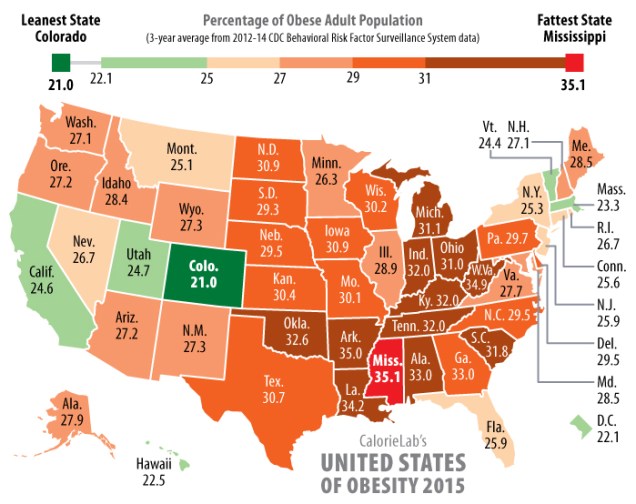
National Public Radio’s Here & Now is covering the U.S. obesity epidemic this week, highlighting the fact that the number of people who are overweight or obese has nearly doubled since the 1980s.

The numbers have gotten to the point in which obesity is arguably the most pressing public health issue of our day. Roughly one in three adults in the United States are obese (up about 9 percent from 1999), obesity costs the country more than $147 billion each year.

Check out today’s segment on Here & Now.

fattest-states-2015-big

Infographic source: CalorieLab.com

Lack of care coordination partially to blame for opioid abuse

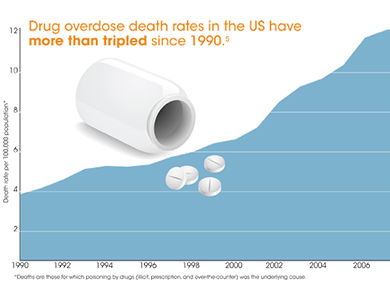
A new report from the University of Michigan’s Center for Healthcare Research and Transformation has found that poorly coordinated care is at least partially to blame for the recent increases in accidental opioid overdoses across the country.

The study looked at data from Blue Cross Blue Shield customers who had received at least one prescription for an opioid during the course of 2013. It found that about 600 patients in Michigan had received at least 10 opioid prescriptions from at least four different providers within a three-month timeframe.

According to researchers, relatively few doctors and pharmacists have been properly checking the state’s Michigan Automated Prescription System (MAPS), which is supposed to help healthcare professionals coordinate care for patients and avoid prescriptions that could counteract one another.

Detroit Free Press: “The study recommends that doctors consider pursue alternatives to prescribing opioids. Patients can be given non-opioid pain relievers, get surgery, go to rehab and physical therapy, and even pursue massages and acupuncture. Another alternative is meditation and other relaxation techniques to cope with the pain.”

Thousands of Oregonians set to lose SNAP benefits in January

card-oregon-trailA rule change at the state level could result in thousands of people in Oregon losing their Supplemental Nutrition Assistance Program (SNAP) benefits as early as January 1, according to The Oregonian.
With rising employment rates across Oregon, the state is no longer able to waive the three-month limits typically imposed on unemployed people in the Portland metro area. The shift affects non-disabled people between the ages of 18 and 50 “who aren’t caring for children, working 30 hours a week or earning at least $930 a month.”

Advocates say that a large chunk of these individuals are already at a high risk for becoming homeless, as they tend to have just part-time jobs and little job security. Recipients who use up their three-month limit before finding a job would then have to wait another three years before being eligible to apply for food stamps again.

As jobs numbers improve, Oregon will no longer be able to offer the three-month waiver, a policy implemented in the mid-1990s when Congress implemented numerous welfare-to-work measures.

Advocates and shelters say they are preparing to assist individuals on the brink of homelessness, but the fact that people who are already homeless lack a consistent address makes these efforts difficult.

Oregon healthcare systems look to limit opioid prescriptions

A number of large healthcare providers in Oregon are making it more difficult for people to get opioids, in response to the growing epidemic sweeping both the state and the country.

According to Oregon Public Broadcasting, Multnomah County health officials have released new guidelines for prescribing these types of medications, which include limiting amounts and double-checking if patients are receiving prescriptions from any other source.

Additionally, the state attorney general’s office has announced that it is providing more than $500,000 in funding to the Oregon Coalition for Responsible Use of Meds and Oregon Health and Sciences University (OHSU) for efforts aimed at reducing opioid abuse.

A recently released report from Multnomah County indicates that an average of two people die each week in Portland due to opioid overdoses.

OverdoseRates