In 2000, the United Nations launched the Millennium Development Goals, which were to be met by 2015. Although there has been a great deal of progress, there is much left to be done.
Thus the UN last year implemented its new Sustainable Development Goals, set to be completed by 2030. There is a common thread that runs through most of the 17 SDGs and the MDGs: family planning.
USAid Director of Population and Reproductive Health Ellen Starbird said at the recent International Family Planning Conference that “family planning was the ‘critical link’ to meet each of the 17 goals.” Some of the goals show a clear picture to the connection to family planning, although there are a few that would appear to have little or no connection.
The SDG objective of “responsible consumption and production” appears to be increasingly out of reach, with a population boom in developing nations that has been the product of poor family planning and that will directly lead to larger, less educated and resource-poor groups of people. The goals of fostering sustainable cities and communities, clean water and sanitation, quality education, decent work and economic growth, zero hunger, affordable and clean energy, climate action are all impacted by the current size, growth and age of the population.
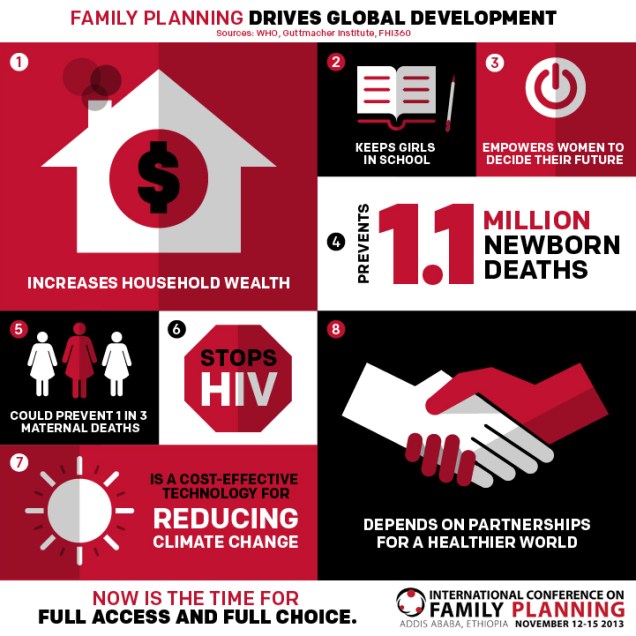
Starbird looks to the energy crises in many impoverished nations and sees a huge effort to provide electricity to citizens. These countries are struggling to meet the energy needs of their growing populations, while also dealing with an immense number of young citizens being uneducated and without opportunities to find employment.
The lack of work and education are causally connected to poverty, another goal set by the United Nations, to end poverty on a global scale. Of the 17 goals, there are two in which a connection can easily be made to family planning—such as good health and wellbeing and gender equality. An Indonesian finance manager has seen the impact and importance of comprehensive family planning, as that country has dedicated 5 percent of its overall health-spending budget to family planning, which includes accessibility to long-term contraceptives and peer education programs.
As a global population, we are faced with many daunting challenges that the international community has acknowledged. All of the Sustainable Development Goals are important and deserve appropriate resources dedicated to them. It’s clear to see that by focusing on family planning disparities, a positive impact will be made on many of the other goals in the program.
 Twin Cities Public Health