Opioid abuse epidemic impacts workers, employers

The United States is in the middle of a full-blown opioid abuse epidemic, and it’s having some signifiant effects on productivity in the workplace.

One 2007 study found that prescription opioid abuse cost employers more than $25 billion, a number that could be much higher today. And the problem is exacerbated by the fact that few employers screen for prescription opioids, instead opting for drug tests for marijuana and other illegal drugs.

This issue is tied closely to workers’ compensation benefits, as opioids are often prescribed to to individuals seeking pain relief due to an on-the-job injury. In fact, a majority of workers’ comp claims nationwide that involved pain medication included prescriptions for opioids.

It’s also interesting to note that opioid abuse is just as prevalent among white-collar workers as it is blue-collar workers, and those who have high professional stature often find it more difficult to seek treatment. In fact, the addiction rate among legal professionals is nearly twice that of the general population. Many individuals are able to hide their addictions from their employers for years, but continue to suffer from decreased productivity and brain function as time goes on.

The over-prescribing of opioids has been connected to increased rates of heroin abuse nationwide.
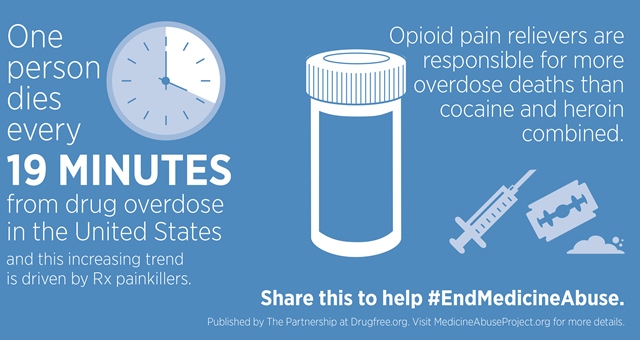

opioid image


CDC identifies states with highest rates of drug overdoses

prescriptiondrugs-050313-rn-tifThe U.S. Centers for Disease Control and Prevention has released a new report detailing the states that have seen the highest rates of drug overdoses over the past 15 years. According to the study, which is based on National Vital Statistics System data, West Virginia tops the list with 35.5 fatal overdoses per 100,000 people. New Mexico, New Hampshire, Kentucky and Ohio rounded out the top five.

The CDC has also determined that more than 28,000 people in the United States died from opioid overdoses in 2014 (last year’s numbers are not yet available), and that the numbers of these overdoses in particular have more than tripled since the year 2000. In all, roughly 47,000 people died from drug overdoses in general.

In terms of age groups, individuals between 25 and 44 and those older than 55 saw the highest increases in drug overdose rates. States with the most significant increases in fatal overdoses included Alabama, Georgia, Illinois, Indiana, Maine and Maryland.

According to the CDC, there were more than 1.5 times more fatal drug overdoses between 2000 and 2014 than there were fatal auto accidents.

Lack of care coordination partially to blame for opioid abuse

A new report from the University of Michigan’s Center for Healthcare Research and Transformation has found that poorly coordinated care is at least partially to blame for the recent increases in accidental opioid overdoses across the country.

The study looked at data from Blue Cross Blue Shield customers who had received at least one prescription for an opioid during the course of 2013. It found that about 600 patients in Michigan had received at least 10 opioid prescriptions from at least four different providers within a three-month timeframe.

According to researchers, relatively few doctors and pharmacists have been properly checking the state’s Michigan Automated Prescription System (MAPS), which is supposed to help healthcare professionals coordinate care for patients and avoid prescriptions that could counteract one another.

Detroit Free Press: “The study recommends that doctors consider pursue alternatives to prescribing opioids. Patients can be given non-opioid pain relievers, get surgery, go to rehab and physical therapy, and even pursue massages and acupuncture. Another alternative is meditation and other relaxation techniques to cope with the pain.”

Is everything we think we know about addiction wrong?

A newly released animated video from a group called In a Nutshell (Kurzgesagt in the group’s home country of Germany) challenges what is often our first instinct when it comes to drug abuse — to blame the user and/or the addictive qualities of the substance.

Rather, the video argues that one’s environment and ability to form connections with other people play a much greater role than the chemicals in substances themselves, as evidenced by some early 20th century experiments and other studies throughout the past several decades.

Check out the video below. It’s worth a watch for anyone in the community health and substance abuse prevention fields.

Heroin addiction spikes in suburban areas

prevention educationOpioid addiction has spread like wildfire in U.S. homes over the past several years, stemming largely from what experts believe is the over-prescription of painkillers that act as gateway drugs to heroin abuse. In fact, according to SAMHSA, two of the most prescribed painkillers in the country—Oxycodine and Hydrocodone—have the highest risk of addiction for those who take them.

Dazed: “Accessibility means availability, and availability means that heroin addiction is everywhere. Long gone are the stereotypical views of addicts as the homeless people that sleep under the highway. What is so terrifying about the epidemic is that addiction and death by overdose has become so common that it almost feels as though it has been normalized.”