Drugged driving now rivals drunk driving for risk of fatal accidents

A new report from the Governors Highway Safety Association indicates that driving while under the influence of drugs has become nearly as big of a problem nationwide as drunk driving. According to the report, there were drugs found in the systems of about 40 percent of all fatally injured motorists who were tested. This is a marked increase from 2005, when that rate was roughly 29 percent.

The GHSA report goes on to state that there are a number of likely causes of these trends, including the fact that prescription drug use has quadrupled over the past 15 years. The legalization of marijuana in some states (including Washington and Oregon) is another likely factor.

Upon releasing the report, GHSA Executive Director Jonathan Adkins said that greater efforts must be undertaken at state levels to reduce driving under the influence of drugs, especially marijuana. It is worth noting, however, that several studies have found varying results tied to the marijuana legalization and the prevalence of drugged driving. Studies found a small increase in driving under the influence of marijuana rates in Colorado, while there has been no noticeable change in California since the state decriminalized the drug in 2011.

Unfortunately, when it comes to marijuana, there is not yet a reliable equivalent to the Breathalyzer test that measures an individual’s blood alcohol content (BAC). To that end, the GHSA recommends more training for law enforcement officers to identify motorists who may be operating while impaired.

(Source: Washington Post)
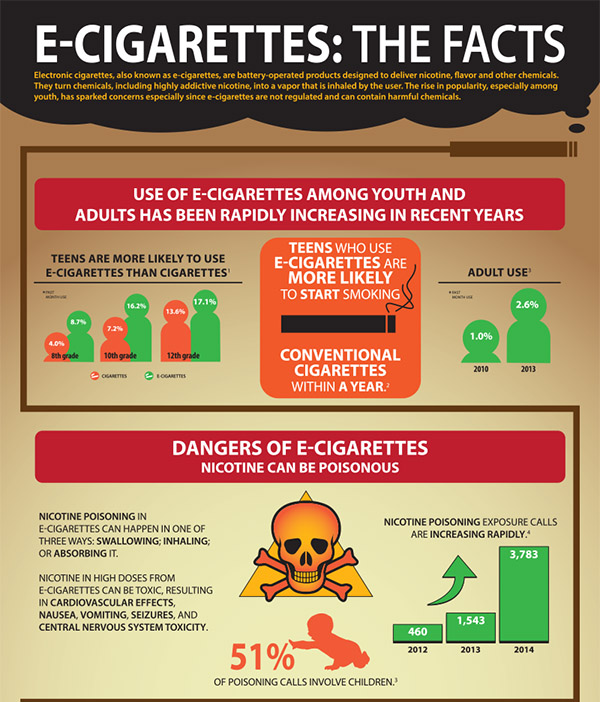
E-cigarettes still incredibly dangerous for youth

It seems as if e-cigarettes are everywhere, often billed as a healthier alternative to smoking traditional cigarettes. In fact, sales of these devices has increased about five-fold over the past three years alone.

However, e-cigarettes can still be very dangerous for youth, with teenagers who start smoking them being much more likely than their peers to start smoking regular cigarettes within the next 12 months. Check out this great infographic from the National Institute on Drug Abuse:

ecigarettes, drug abuse prevention

CADCA holds Mid-Year Training Institute in Indianapolis

An estimated 1,500 substance abuse prevention and treatment professionals are meeting in Indianapolis this week as part of the Community Anti-Drug Coalitions of America (CADCA) Mid-Year Training Institute.

According to a media advisory from CADCA, the event will provide a week-long training opportunity to help participants combat youth drug use and abuse—one of the most pressing community health issues of our day. Key areas of focus include reducing impaired driving, creating tobacco-free environments and developing policies to reduce the use of marijuana, heroin, synthetic drugs and alcohol by young people.

The week will also feature a keynote address from Director of the Office of National Drug Control Policy Michael Botticelli. The event starts today and runs until Thursday.

Baby boomers more prone to drug overdoses than younger adults

Recent numbers from the Centers for Disease Control indicate that more than 12,000 baby boomers (those born between 1946 and 1964) died from accidental drug overdoses in 2013. It marks the first time in recorded history that overdoses in this age group have surpassed those ages 25-44, and represents an 11-fold increase from 1990.

The Fix: “More older adults died of accidental drug overdoses than from car accidents or influenza and pneumonia. In 2012, people between ages 45 and 64 had the highest rate of inpatient hospital stays for opioid abuse.”

NIDA releases ‘Monitoring the Future’ survey results

The National Institute on Drug Abuse (NIDA) has released the results from its 2013 Monitoring the Future Survey, which asked eight, 10th and 12th-grade students about their tobacco, alcohol and cigarette use. This video provides a great summary of the study, which included more than 41,000 students from 389 public and private schools across the United States (including Oregon):

Learn more about the NIDA survey and results here: http://www.drugabuse.gov/related-topics/trends-statistics/infographics/monitoring-future-2013-survey-results